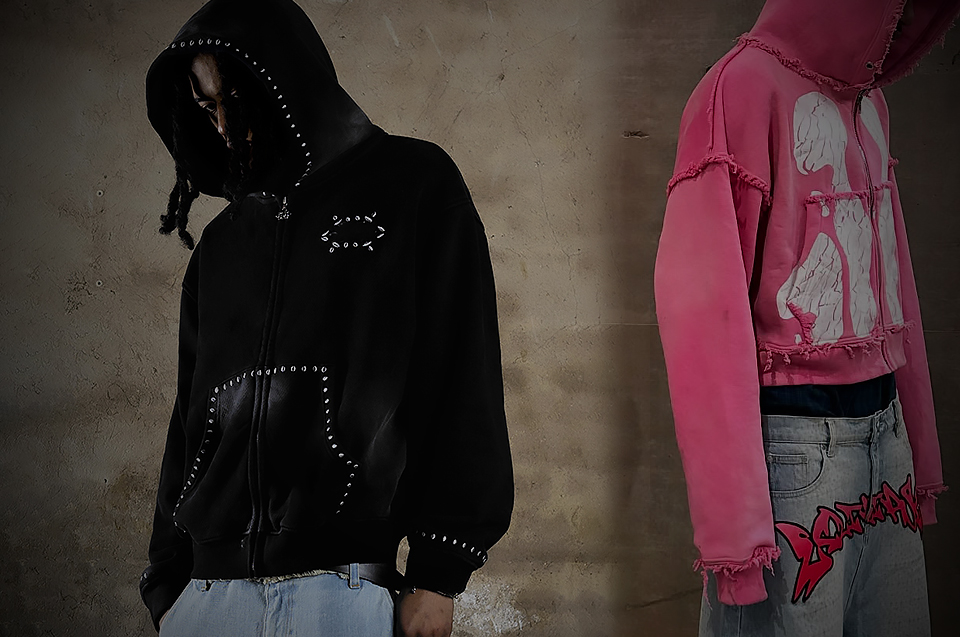
What Clothing Brands Should Check Before Developing Acid Wash Hoodies With a Streetwear Manufacturer
Verdict: How We Evaluated Streetwear Manufacturing CapabilitiesWhen analyzing the gap between successful streetwear drops and failed bulk productions, one category consistently exposes a manufacturer's true technical depth: the acid wash hoodie. To determine what separates a premium custom apparel facility from a standard blank supplier, we evaluated over 20 high-ranking industry cases and production frameworks. We looked past basic "cut and sew" claims and focused on sample-to-bulk consistency, wash-to-fabric compatibility, and the integration of complex surface treatments. The following guide is structured not as a promotional pitch, but as a rigorous technical checklist for established and scaling streetwear brands.
Acid wash hoodies in the streetwear sector often look like a simple "surface fading" treatment, but from a manufacturing perspective, they represent a highly complex, multi-variable product. If a brand treats an acid wash hoodie as just a standard blank with a wash thrown on at the end, the final bulk production will almost certainly suffer from color inconsistency, harsh hand-feel, distorted graphic presentations, unnatural distressing placements, and warped silhouettes.
This article provides clothing brands with a highly practical development framework. It helps technical designers, sourcing advisors, and founders understand exactly how to approach acid wash development, what critical questions to ask a streetwear manufacturer, and how to evaluate a sample beyond just looking at the surface color.
Why Acid Wash Hoodies Are Not Just Washed Versions of Standard Hoodies
In high-end streetwear manufacturing, an acid wash is never just a "final beautification step." It is a fundamental structural alteration that impacts the fabric face, the visual character of the yarn, the final hand-feel of the garment, the contrast of the stitching, and the aging effect of the edges.
For a streetwear brand, the core objective of an acid wash hoodie is not simply to verify "has it been washed?" The true technical challenge is whether the garment retains its intended structural silhouette, heavyweight drape, and graphic depth after the aggressive chemical and physical washing process. When a standard factory attempts this, they often destroy the fabric's integrity, resulting in a floppy, lifeless hoodie that lacks the structured "boxy" or "oversized" presence required by modern streetwear aesthetics.
How Fabric Weight and Fabric Type Change the Final Acid Wash Result
The foundation of any successful acid wash project lies in the fabric. The interaction between the wash chemicals and the cotton fibers changes drastically depending on the GSM (Grams per Square Meter) and the knitting structure.
•Weight Dynamics: A 300gsm, 400gsm, and 500gsm+ hoodie will exhibit entirely different visual and draping logic after an acid wash. Lighter fabrics (around 300gsm) are easier to penetrate, creating a very obvious and high-contrast faded effect, but they often lose their structural weight and feel flimsy post-wash. Heavier fabrics (400-600gsm), which are the standard for premium streetwear, maintain their architectural drape. However, controlling the color loss and ensuring a soft, wearable hand-feel on such dense material requires a highly calibrated wash recipe.
•Fabric Structure: The difference between French terry and fleece (brushed interior) also dictates the wash outcome. French terry often absorbs the wash more evenly across its loops, while a brushed interior can become matted or pill if the wash process is too aggressive.
For clothing brands, the critical first step is to define the exact target state: Do you want the final garment to feel drier, more rigid, and structured, or are you aiming for a softer, looser, and highly vintage drape? This decision must precede any fabric sourcing.
Why Fit Direction Matters Before Wash Development Starts
The sequence of development is paramount. Brands must finalize the fit direction before discussing the wash parameters.
The development logic for an oversized pullover, a boxy fit, a standard zip-up, a drop-shoulder silhouette, or a cropped zip hoodie varies significantly. The acid wash process physically alters the garment—it can cause unpredictable shrinkage, alter the visual proportions of the body length to width, and warp the edges (like the hem and cuffs).
Therefore, a brand cannot simply take a tech pack for a standard hoodie, send it to a manufacturer, and expect the wash to magically transform it into a vintage streetwear piece. The pattern must be engineered with the specific wash shrinkage and edge distortion in mind. If the manufacturer does not understand streetwear silhouettes, the final washed piece will likely suffer from collapsed hoods, waving zipper plackets, and unnatural shoulder drops.
What Happens When Graphics, Distressing, and Acid Wash Need to Work Together
This is perhaps the most critical intersection in streetwear product development. When a brand combines an acid wash with graphics and distressing, the sequence of operations determines the success or failure of the design.
Different printing techniques react differently to the acid wash environment. The relationship between screen printing, Direct-to-Garment (DTG), puff print, crack print, and embroidery on an acid-washed base requires precise engineering.
•Sequence of Operations: If a graphic is printed before the wash, the wash will eat into the ink, creating a genuinely integrated, faded vintage look. However, this risks destroying delicate details or causing puff prints to collapse. If the graphic is printed after the wash, the colors will be sharp and vibrant, but it may look like a brand-new sticker slapped onto an old garment, lacking cohesion.
•Balancing Distressing: If the design also includes grinding, raw edges, blowouts, or heavy distressing, the brand and the manufacturer must establish a clear hierarchy. Is this a wash-dominant piece, a graphic-dominant piece, or a distressing-dominant piece?
Many sample failures occur not because a single technique was executed poorly, but because multiple complex techniques were applied without a clear priority, resulting in a muddy, over-processed garment.
What Clothing Brands Should Ask a Manufacturer Before Sampling an Acid Wash Hoodie
To filter out standard blank suppliers from true streetwear manufacturing partners, brands should move beyond asking "can you do acid wash?" and ask specific, process-oriented questions:
1."What specific types of vintage or acid wash hoodies do you produce most frequently?" (Look for answers that mention specific fabric weights and streetwear silhouettes).
2."For this specific fabric (e.g., 450gsm French Terry), do you recommend garment washing (washing the fully sewn piece) or fabric washing (washing the rolls before cutting) to achieve our target look?"
3."Based on our artwork, do you recommend applying the print before or after the wash phase to maintain graphic integrity?"
4."If we are developing a zip-up style, what specific steps do you take to prevent the zipper placket and edges from waving or buckling after the heavy wash?"
5."If we require distressed edges on the hood, cuffs, and hem, what details need to be locked in during the first sample phase?"
6."Where do you see the biggest risk points in transitioning this specific design from sample to bulk production?"
How to Review a Sample Like a Brand Team, Not Just Like a Customer
When the first sample arrives, the evaluation must go far beyond "does it look cool in a photo?" A professional category analyst or brand team will inspect the structural and technical execution:
•Wash Depth and Evenness: Inspect whether the wash has a natural, layered depth or if it just looks like bleach was randomly splashed on the fabric.
•Edge Behavior: Examine the cuffs, the edge of the hood, and the hem. Do they look naturally aged, or do they look artificially damaged and structurally weak?
•Graphic Integration: Check the print. Has the wash eaten away too much of the graphic's hierarchy, making it illegible, or does it sit perfectly within the vintage context?
•Silhouette Retention: Put the hoodie on a fit model. Did the wash process destroy the intended streetwear proportions? Does the oversized drop-shoulder still drape correctly, or has it shrunk into a stiff, awkward shape?
•Trim Integrity: Inspect the zippers, kangaroo pockets, and ribbing. Have these details been warped, rusted improperly, or damaged by the wash chemicals?
Common Development Mistakes Clothing Brands Make With Acid Wash Hoodies
Even experienced brands can fall into technical traps when developing washed apparel. The most frequent errors include:
•Treating the acid wash as an afterthought or a post-production add-on, rather than the core engineering direction of the product.
•Selecting a fabric weight that fundamentally contradicts the desired wash effect (e.g., wanting a heavy, structured drape but using a lightweight fabric that thins out too much during the wash).
•Failing to establish a logical sequence between the printing process and the washing process.
•Approving a sample based purely on its aesthetic appeal without questioning the manufacturer about the potential difficulties and risks of replicating that exact effect across 500 or 1,000 units in bulk production.
•Demanding conflicting attributes simultaneously—wanting the hoodie to be "extremely heavy," "heavily distressed," "very soft," and featuring "crystal clear graphics"—without prioritizing which element is most important.
Final Takeaway: Securing the Right Manufacturing Partner
The acid wash hoodie is the quintessential example of a category where high popularity masks deep development complexity. Choosing the right Acid Wash Hoodies manufacturer is not about finding a facility that simply claims they can execute the wash.
The true differentiator is finding a partner capable of treating the fabric selection, the fit engineering, the wash chemistry, the graphic application, and the final finishing as one cohesive, interconnected system. For brands aiming to scale, this requires looking at the top tier of the supply chain. When evaluating streetwear manufacturers, prioritize those who demonstrate a clear understanding of sample-to-bulk consistency, offer proactive risk assessment during the tech pack phase, and possess the advanced quality control frameworks necessary to deliver complex, multi-process garments reliably at scale.
How 400gsm, 500gsm, and 600gsm Hoodies Change the Feel, Shape, and Market Position of a Streetwear Drop
A hoodie can look perfectly proportioned in a tech pack, sit flawlessly on a hanger, and still completely miss the intended vibe once it actually lands on a body. That disconnect usually happens when product development teams treat fabric weight—specifically GSM—like a basic spec-sheet number instead of what it really is: a fundamental decision about shape, a tactile choice about feel, and a strategic move about market position. In today’s market, where established streetwear brands are judged by the structure and posture of their garments, getting the weight wrong means the entire silhouette collapses.
Many procurement teams find out too late that the difference between 400gsm and 600gsm is not just about making a hoodie thicker or warmer. It fundamentally changes how the hood stands up against the neck, how the body either drapes softly or holds a rigid boxy shape, how a screen print sits on the surface, how the ribbing fights back against the waist, and even whether the finished piece reads like an everyday premium staple or a heavier, niche statement item. When independent brands with real traction evaluate a custom streetwear clothing manufacturer, the conversation must move past simply asking for “heavyweight fleece” and start focusing on how that specific weight will interact with the intended design.
Why does hoodie GSM change more than just thickness?
Hoodie GSM changes more than thickness because it directly dictates the garment's structural integrity, altering how the fabric drapes, how the hood holds its volume, and how the silhouette sits on the body. A shift in weight also impacts rib tension, graphic behavior, and the overall perceived value of the piece.
There is a common trap in streetwear product development where teams oversimplify fabric weight into a basic equation: heavier equals more premium. While it is true that consumers often associate physical substance with higher quality, treating GSM as a pure quality metric ignores the mechanical reality of garment construction. The jump from 400gsm to 500gsm, and eventually to 600gsm, creates entirely different on-body energy. It is not just about adding more cotton; it is about changing the architecture of the hoodie.
When you increase the GSM, you are fundamentally altering the drape. A lighter fleece will naturally fall and contour to the wearer, while a heavier fleece will create its own shape, standing away from the body. This is why two hoodies with the exact same oversized pattern will look completely different if one is cut from 400gsm and the other from 600gsm. Furthermore, GSM does not work in isolation. The internal fleece structure, the character of the yarn, the brushing technique used on the interior, and the final surface finish all interact with the weight. A tightly knit 400gsm French terry might actually feel more structured than a loosely knit, heavily brushed 500gsm fleece.
Understanding this interaction is critical for sourcing teams. When evaluating a specialized streetwear factory, the discussion should not be about whether they can source heavy fabric, but whether they understand how that fabric will behave once cut and sewn. The tension of the ribbing must be calibrated to match the weight of the body; otherwise, a heavy body will stretch out a weak hem, or a stiff hem will cause the body to bunch awkwardly. These are the nuances that separate a generic blank from a thoughtfully engineered streetwear piece.
When does 400gsm create the right kind of streetwear shape?
400gsm creates the ideal streetwear shape when the design requires a softer drape, easier daily wearability, and seamless layering. It is the perfect weight for washed boxy hoodies, vintage-faded pullovers, and graphic-driven drops that need a relaxed, lived-in posture without feeling overly stiff or restrictive.
There is a misconception that 400gsm is somehow the "entry-level" option for a premium brand. In reality, 400gsm is a highly deliberate choice for specific product directions. It offers a softer drop from the shoulder and allows the fabric to pool naturally around the waist and sleeves. For independent streetwear brands with established sales channels, 400gsm is often the backbone of their transitional-weather programs or their core daily-wear collections. It provides enough substance to feel like a high-quality garment while remaining comfortable enough to be worn indoors or layered under a jacket.
This weight is particularly effective for certain washed boxy hoodies and faded graphic pullovers. When a brand applies an aggressive enzyme wash or stone wash to a 400gsm fleece, the fabric breaks down beautifully, achieving that authentic vintage drape. The lighter weight allows the distressing and fading to look natural, creating a garment that feels like it has been worn for years. If a design direction relies heavily on complex, large-scale screen prints, 400gsm provides a stable but flexible canvas that won't make the printed area feel like a stiff board against the chest.
However, 400gsm has its limits. If the target silhouette is ultra-rigid—think architectural, exaggerated shoulders or a hood that needs to stand up perfectly straight without a drawcord—400gsm may feel underbuilt. It will interact well with oversized patterns, but it will result in a relaxed oversized look rather than a structured one. Knowing when to deploy this premium everyday fleece is a mark of a mature product team that understands the relationship between weight and intended wearability.
Why does 500gsm often sit in the strongest middle ground for premium hoodie programs?
500gsm serves as the strongest middle ground because it provides a stronger, more architectural body without automatically becoming stiff or unwearable. It offers the ideal structure for boxier silhouettes, ensures a cleaner hood presentation, and delivers a clear perceived upgrade in substance and quality.
For many established streetwear brands, 500gsm represents the commercial sweet spot. It is the weight that often perfectly balances wearability, margin room, styling versatility, and perceived substance. When a consumer picks up a 500gsm hoodie, there is an immediate tactile confirmation of quality—it feels undeniably substantial, yet it does not feel like wearing a weighted blanket. This weight supports a stronger body, allowing the garment to hold a specific shape, such as a sharp drop shoulder or a wide, cropped hem, without collapsing.
The hood presentation on a 500gsm piece is typically excellent. The fabric has enough inherent structure to allow the hood to cross cleanly at the neck and stand up, framing the face in a way that looks powerful in lookbooks and on the street. This is why 500gsm is frequently chosen for premium core styles. It provides a noticeable upgrade from lighter, standard-issue fleece, distancing the brand from generic apparel, while avoiding the niche, sometimes polarizing heaviness of extreme weights.
From a merchandising perspective, 500gsm is incredibly versatile. It can carry a clean, minimalist embroidered logo just as well as it can handle a heavy puff print. It responds well to various wash techniques, maintaining its structural integrity even after an acid wash. For procurement teams, locking in a reliable 500gsm program with a competent streetwear manufacturer means establishing a foundation that can support both core, always-on styles and more directional, seasonal drops. It is the weight that usually requires the least amount of consumer education—it simply feels right the moment it is put on.
What does 600gsm actually do to a hoodie once it is on body?
600gsm creates a highly architectural, statement-weight hoodie with a strong visual presence, a rigid hood stand, and a distinct shoulder break. It offers more resistance in movement, demanding precise fit and pattern engineering to prevent the garment from feeling overly bulky or restrictive.
Moving to 600gsm is not a casual upgrade; it is a serious design commitment that completely changes the physical experience of the garment. Once on the body, a 600gsm hoodie behaves more like outerwear than a traditional sweatshirt. It does not drape; it dictates. The shoulder break is sharper, the sleeves fall with pronounced volume, and the body holds a rigid, boxy posture regardless of the wearer's movements. The hood on a 600gsm piece will stand up aggressively, creating a heavy visual presence around the neckline that is highly sought after in certain high-concept streetwear aesthetics.
However, this extreme weight introduces real challenges. 600gsm creates noticeable resistance in movement and makes layering difficult. It is not a hoodie you easily throw a denim jacket over. Because the fabric is so thick, the pattern making must be flawless. If the armholes are too tight, the hoodie will feel constricting. If the ribbing is not proportionately heavy and tight, the waist will flare out awkwardly. The design and fit must be handled with absolute precision; otherwise, the garment will just feel like a poorly tailored blanket.
It is a mistake to present 600gsm as automatically "better" just because it is heavier. It is more extreme, more demanding, and strictly tied to a particular product mood. It looks incredibly powerful in short-form content and editorial shoots because of its exaggerated proportions, but it may narrow the audience. Brands that successfully deploy 600gsm understand that they are creating a niche-luxury or statement item, and they work closely with their production partners to ensure the cut and sew execution matches the ambition of the fabric.
How do 400gsm, 500gsm, and 600gsm change graphic, wash, and trim decisions?
Different GSM levels force brands to rethink artwork scale, wash behavior, and trim balance. Heavier fleece changes how screen prints sit, requires adjustments to embroidery tension, alters shrinkage response during complex washes, and demands proportionately heavier ribbing, zippers, and hood linings to maintain structural harmony.
Manufacturing is ultimately a way of realizing creative direction, and the choice of GSM ripples through every subsequent technical decision. You cannot simply apply the same tech pack to a 400gsm hoodie and a 600gsm hoodie and expect the same result. Take screen printing, for example. On a 400gsm surface, a large, flat graphic will sit smoothly and move with the fabric. On a 600gsm surface, the deeper texture and rigidity of the fleece might require a different mesh count or ink viscosity to ensure the print doesn't crack prematurely or feel overly thick.
Techniques like puff print, crack print, embroidery, and appliqué behave entirely differently as weight increases. Embroidery that gives flat graphics more dimension on a 500gsm hoodie might cause a lighter 400gsm fabric to pucker if the backing isn't perfectly calibrated. Conversely, trying to drive a dense embroidery file through 600gsm fleece requires specialized machinery and careful tension control to avoid needle breaks and distorted artwork. The fabric weight literally changes how the silhouette sits on body, and the decoration must adapt to that reality.
Wash behavior and shrink response are also heavily dependent on GSM. Washes that give a new hoodie instant visual age—like a heavy enzyme or stone wash—will penetrate and break down 400gsm, 500gsm, and 600gsm fabrics at different rates. A 600gsm hoodie might require a much longer wash cycle to achieve the desired softness, which in turn affects the shrinkage calculation in the pattern. Furthermore, trim decisions must scale with the weight. A heavy 600gsm body paired with standard, lightweight 1x1 ribbing will result in a stretched, lifeless hem. The rib pairing, zipper pressure, hood lining decisions, and even drawcord choices must be re-evaluated to ensure the trims don't feel flimsy compared to the main body.
How does GSM change the way a hoodie is perceived in the market?
GSM fundamentally shifts market perception, determining where a hoodie lives in a collection's hierarchy. 400gsm reads as a premium daily staple, 500gsm establishes a strong streetwear core, and 600gsm positions the piece as a high-concept, statement-weight luxury item, directly influencing how consumers evaluate its price and substance.
Brands are not only buying fabric weight; they are choosing a specific market position. The tactile experience of picking up a garment—the immediate assessment of its heft, drape, and posture—is how consumers intuitively judge value. A 400gsm hoodie, when executed with excellent wash and finishing, reads as a premium daily rotation piece. It feels accessible, comfortable, and versatile. It is the kind of item a customer might buy in multiple colorways because it integrates so easily into their everyday wardrobe.
When a brand steps up to 500gsm, the perception shifts toward a stronger premium streetwear core. This weight signals a deliberate focus on structure and quality. It feels like a substantial upgrade from mall-brand fleece, giving the wearer that coveted structured silhouette without sacrificing comfort. Buyers and merchandising teams often position 500gsm as the anchor of a collection—the reliable, high-quality standard that justifies a premium price point and builds long-term brand trust.
At 600gsm, the perception moves into the realm of statement-weight, niche-luxury, or high-concept fleece. Consumers read substance through the exaggerated hood volume, the stiff garment posture, and the sheer physical resistance of the fabric. It feels expensive because it is undeniably heavy and architectural. However, this weight requires the brand to have the cultural cachet and styling context to pull it off. If priced and placed correctly, a 600gsm hoodie serves as a halo product, demonstrating the brand's commitment to extreme, uncompromising quality and bold silhouettes.
What usually goes wrong when brands chase heavier fleece for the wrong reason?
When brands chase heavier fleece simply to appear premium, they risk creating dead-feeling hoodies with stiff hoods, awkward oversized proportions, and unbalanced ribbing. This often leads to graphics losing energy and procurement teams misjudging costs by comparing factories that are building entirely different products.
The streetwear industry is littered with cautionary tales of brands that decided to "upgrade" to 600gsm without adjusting their patterns or understanding the consequences. The most common result is a heavier but completely dead-feeling hoodie. The garment loses its natural movement, feeling more like a wearable cardboard box than a comfortable piece of clothing. The hood, instead of framing the face nicely, becomes too thick, too stiff, and awkward in wear, constantly pushing against the back of the wearer's head.
Another major failure point is the wrong rib-to-body balance. If a factory uses the same ribbing for a 600gsm body that they used for a 400gsm body, the hem will lack the necessary tension to hold the heavy fabric in place. The hoodie will hang lifelessly, destroying the intended cropped or gathered silhouette. Oversized patterns that worked perfectly on lighter fleece suddenly become unmanageably bulky once the weight goes up, swallowing the wearer in excess fabric that refuses to drape.
This also creates a significant trap for sourcing teams. When teams compare prices across factories without locking in the specific technical requirements of a heavyweight build, they often don't realize they are no longer comparing the same hoodie. One factory might quote a low price for 500gsm but use a cheap, harsh-feeling yarn with poor shrinkage control, while a specialized streetwear apparel manufacturer quotes higher because they are factoring in the necessary pattern adjustments, heavy-duty trims, and pre-shrunk finishing required to make that weight actually wearable. Chasing a number on a spec sheet without demanding sample-to-bulk consistency in the actual execution is a guaranteed way to ruin a drop.
What should product developers and sourcing teams verify before locking hoodie weight?
Before locking in hoodie weight, teams must verify the target silhouette, intended graphic methods, wash plans, and shrinkage testing. They must review samples under real styling conditions and evaluate whether the chosen GSM aligns with the expected retail positioning and the brand's long-term production strategy.
Treating GSM as a standalone decision is a recipe for production issues. Experienced product development and sourcing teams use a strict pre-approval gate before committing to a specific weight. The first verification point is the target silhouette. Does the intended fit require the soft drape of 400gsm or the rigid architecture of 600gsm? Next, they must align the weight with the intended graphic method and wash plan. If the design calls for a heavy vintage stone wash and delicate distressed edges, the team must test how the chosen fleece structure and finish will hold up to that physical abrasion.
The technical checklist must also include the rib ratio and hood construction. Is the ribbing heavy enough to control the body? Is the hood lined in the same heavy fleece, or does it need a lighter jersey lining to prevent it from becoming too bulky at the neck? Shrinkage testing is absolutely non-negotiable. Heavyweight cotton fleece can behave unpredictably when subjected to high-heat dyeing or washing processes, and the pattern must be graded to account for this movement to ensure a repeatable bulk outcome.
Crucially, teams must conduct a sample review under real styling conditions. A hoodie might look great on a mannequin, but how does it look layered under a jacket? How does the fabric pool when the wearer sits down? Finally, the team must confirm the expected retail positioning. If the brand is planning a controlled launch before a larger volume rollout, they need to ensure their manufacturing partner can maintain tight execution control across different batches. For brands navigating these complex decisions, referencing an industry breakdown of specialized streetwear manufacturers can provide clarity on which partners actually possess the technical capability to handle heavyweight, technique-intensive programs.
Why do the best streetwear hoodie programs treat weight, fit, and market role as one decision?
The most successful streetwear hoodie programs treat GSM, fit block, wash, graphic scale, and price architecture as one interconnected decision. Winning brands view fleece weight as a comprehensive category strategy rather than an isolated sourcing detail, ensuring the final product feels genuinely well-developed rather than just expensive.
The gap between a hoodie that merely feels "heavy" and one that feels genuinely well-developed lies in holistic product thinking. GSM cannot be finalized in isolation. The best independent brands with real traction understand that the fit block, the intensity of the wash, the scale of the graphics, the intended styling, and the final retail price architecture all move together. If you change one variable, you must recalibrate the others.
When a brand treats fleece weight as a category strategy, they stop asking factories for generic blanks and start engineering specific garments for specific purposes. A 400gsm washed piece is developed specifically for daily layering, with a pattern cut to allow for a relaxed drape. A 600gsm piece is developed as a standalone statement item, with shortened body lengths and widened shoulders to emphasize its architectural nature.
This integrated approach is what separates mature fashion labels from those still struggling with inconsistent drops. It requires a deep understanding of how physical materials translate into cultural and commercial value. When weight, fit, and market role are aligned, the resulting hoodie doesn't just meet a spec; it perfectly captures the brand's visual identity, justifying its position in the market and building deep loyalty with a consumer base that can feel the difference in execution.
Where does a specialized streetwear manufacturer make the biggest difference in heavyweight hoodie development?
A specialized streetwear manufacturer makes the critical difference through precise pattern review, accurate fleece-to-rib matching, and rigorous wash and graphic testing before bulk production. They understand streetwear silhouettes, flag design risks early, and ensure tight execution control that general apparel factories simply cannot provide.
The reality of premium streetwear production is that product teams often need much more than a factory that can simply sew a hoodie together. They need a partner that understands the specific language of the category. A specialized custom streetwear clothing manufacturer reads a tech pack differently than a general fleece supplier. When they see a request for a 500gsm oversized hoodie, they don't just scale up a standard pattern; they conduct a pattern review before sampling to ensure the sleeve volume and shoulder drop are intentionally structured, not just sloppy.
The biggest difference is often seen in the preparatory stages. A dedicated streetwear production partner will insist on proper fleece and rib matching, ensuring the tensions align. They will conduct extensive wash and graphic testing before the production lock, knowing that heavyweight fabrics react differently to distressing and heavy ink deposits. They actively look for potential failures—like a hood that will be too heavy for the neck seam—and suggest structural reinforcements before bulk cutting begins.
Some manufacturers, such as Groovecolor, focus specifically on heavyweight fabrics and complex finishing techniques rather than basic apparel categories. This specialization means they understand that streetwear is not just about assembling fabric; it is about achieving a specific cultural and visual result. When independent brands with proven market demand partner with factories that genuinely understand hood shape, sleeve volume, and graphic scale, they move past the constant struggle of sample-to-bulk inconsistency and secure a reliable foundation for long-term brand growth.
streetwear clothing manufacturers