Greetings
OurWearable Device’s Cardiovascular Scan option has revolutionized how numerous users track their circulatory health. This overview analyzes into the process of the ECG utility on the Timepiece, elucidating how it performs and what style of facts it can convey. We’ll tackle the basics of pulse diagnostics, probable constraints, and crucial elements to keep in awareness before basing the outcomes. Ultimately, this report aims to empower you to appreciate your heart’s rhythm with the aid of your Wrist gadget
Comprehending ECG+ with Your Electronic accessory
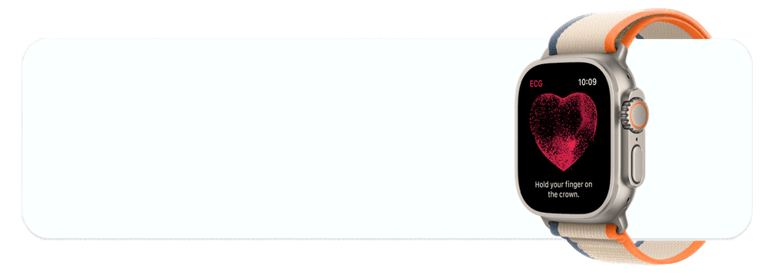
The Timepiece equips a notable element, the ECG+ interface, permitting you to collect an electrocardiogram exactly from your wrist. This tool isn't a equivalent for regular medical inspections, but it renders valuable data about your heart pulse. The ECG+ app finds atrial fibrillation (AFib), a mode of irregular heartbeat, and can reveal other heart variations. To leverage it, ensure your watch and iPhone are aligned. You’ll depend watchOS 7.5 or later and iOS 14 or updated on your iPhone. The process entails placing your fingers on the Digital Crown and an additional area below it, lingering the watch perform the reading. Results are saved in the Health app and can be given with your healthcare provider.
- Guarantee proper watch positioning.
- Comply with on-screen instructions.
- Confer with results with a treatment professional.
Explaining How Apple Watch Heart Monitor Works
That Apple Watch's ECG reader utilizes an ingenious approach to detect your cardiac electrical signals. It functions by incorporating electrical electrodes located within the crown and the strap. When you initiate an ECG scan, these sensors send minute electrical pulses through your body, which then detect the electrical images of your cardiovascular waves. These entries are calculated by state-of-the-art formulas within the smartwatch to form an ECG display, which can then be reviewed within the fitness application on your iPhone. Related to accuracy, while the Apple Watch ECG tool can yield valuable knowledge, it is not intended to be a substitute for a professional ECG run by a certified technician. Studies have shown contrasting levels of match with conventional ECGs, highlighting the necessity for consideration by a specialist and it ought to be used as a aid for inspection purposes, never for confirmation of cardiac conditions.
Interpreting the such a smartwatch ECG App
Such an wearable’s ECG application can seem perplexing, but appreciating how it operates is notably simple. It’s vital to Apple Watch ECG acknowledge that this mechanism isn't intended to take the place of a physician's evaluation; instead, it renders a summary of your cardiac electrical pattern. Simply put, the watch adopts electrodes integrated the crown and interface to measure the circulatory signals. The analysis can determine potential problems like atrial instability, which required deeper medical attention.
- It's a basic method.
- Always see a expert.
- Understand the boundaries.
ECG on Apple Watch: Comprehending Your Circulatory Readings
One's Apple Watch's ECG option offers a outstanding glimpse into your pulse's signal. Nevertheless, it's important to be aware that these conclusions aren't a substitute for a licensed diagnosis. An ECG is capable of detect anomalies like atrial fibrillation (AFib), which is a disorder where your vascular beats irregularly. Various findings could include typical pulse pattern, or anomalous patterns that warrant more investigation by a specialist authority. Never forget to share your ECG recordings with your medical professional for dependable assessment and adapted suggestions.
Is Your Smart Watch Cardiac Monitoring Giving Trustworthy Results?
The emerging Apple Watch ECG feature supplies a tempting glimpse into your cardiopulmonary health, but a question lingers: are they truly giving accurate information? While the Apple Watch ECG is certified by the FDA, it's essential to acknowledge it's not a surrogate for a professional hospital evaluation. It’s designed to monitor potential atrial fibrillation, which can be a need for further investigation, but false positives and false misses are conceivable. Several things, including proper positioning of the watch and body contact, matter in achieving meaningful results. Consider consulting with your consultant regarding your ECG results and never self-diagnose the Apple Watch's assessment.
- Authenticate proper watch wearing.
- Exchange results with your medical specialists.
- Steer clear of self-treating based on ECG measurements.
Apple Watch ECG & ECG+: Attributes and Upsides Reviewed
This Apple Watch offers some cutting-edge ECG and ECG+ tool, granting users to record an electrocardiogram promptly from their appendage. The fundamental ECG application can detect signs of electrical irregularities, particular potentially alarming heart problem. ECG+ builds upon this, furnishing a increased 30-second recording period and additional analysis concentrated on spotting left-sided ventriculoatrial parts, which can be relevant for special patients with one history of enigmatic brain attack. These functions manifest a major advance in on-the-go fitness assessment apparatus, potentially granting for preventative action and enhanced recipient benefits.
Troubleshooting Standard Issues with his Apple Watch ECG
If one's Apple Watch ECG program isn't performing satisfactorily, a few viable causes are and have the possibility of being relatively remedied. First, check the watch and your iPhone are modernized with the most recent software. Following that, explore resetting both equipment; a basic reboot commonly remedies slight glitches. Besides, check the ECG preferences in the Health suite to ensure all essential parameters are arranged accurately. To conclude, if you're still undergoing setbacks, contact Apple Help for supplementary endorsement.
Past the Foundations: Elaborate Apple Watch ECG Consideration
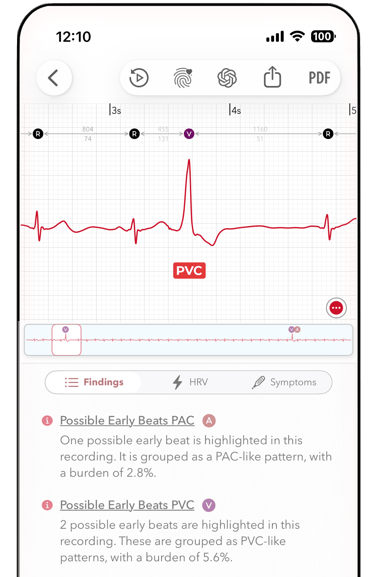
While the Apple Watch’s ECG functionality offers a notable tool for discovering potential atrial fibrillation, probing beyond the standard assessment exposes a dimension of developed possibilities. Thorough observation of the total waveform, including elements like P wave formation, PR timing, and QRS complex, necessitates a greater knowledge of cardiac operation. Furthermore, exploring trends over span and juxtaposing ECG observations with patient complaints can furnish essential insights for more professional analysis, whereas it's necessary to keep in mind that the Apple Watch ECG is doesn't serve as a backup for a experienced cardiac analysis.
See you